


The World's First Gay Love Story?

Why Ambiguity: Is “The Epic of Gilgamesh” The World’s First Gay Love Story?

Love, as defined by modern socially conditioned understandings, is a complex emotion of which is not only impossible to explain in words alone but is often the source of turmoil in human relationships. The ancient Greeks recognized several types of love: (1) Eros (erotic love), (2) Pihilia (affectionate love) and (3) Storge (familiar love), to name a few, according to Philip R. Shaver and Cindy Hazen, scholars of ancient Greek culture, who co-wrote an article in the Journal of Science and Personal Relationships, detailing love as an attachment-theoretical framework: “A Biased Overview of the Study of Love.” However, ancient Greek theories of love, specifically romantic love, were often bound to the confines of heteronormative relationship dynamics, of which are heavily influenced by religious beliefs. This is not substantially different than modern concepts of love and homosexuality today. I believe “The Epic of Gilgamesh”, is one of the earliest surviving epic poems we have of which dances with themes of homosexuality and Eros via the relationship between Enkidu and Gilgamesh. However, many historians and scholars such as Anne Ackerman and Thorkild Jacobsen, have resorted to almost exclusively eroticized interpretations of imagery and language used in the epic to support their claims. Although this approach is not without merit, I believe the conversation can be strengthened. I propose: if we consider the ambiguous nature of the relationship in question as a literary device of which serves to suggest something greater, we then hold the key to solidifying this ambiguous love story as a tragic tale of homosexual Eros. I will offer an alternative perspective via a modern lens of which considers not only the homoerotic imagery and language in the epic, but also brings forward the relevance of the homo-allegorical relational dynamics between the two characters in relation to the author’s purpose and its significance to the relational ambiguity of which plagues this historical debate.
There has been much scholarship on this conversation. Professor at Dartmouth, Susan Ackerman penned one of the more notable works on the topic: “When Heroes Love” a book in which she outlines why we should begin to reconsider the nature of Gilgamesh and Enkidu’s relationship. Rather than analyze using modern concepts and vocabulary, Akerman focused on decoding the relationship by utilizing the wordplay and its significance in ancient Greek culture. Ackerman grounds her argument in meticulously interpreting a highly eroticized perspective on the imagery and sexually suggestive language in the epic, including Gilgamesh’s dream about meteors and axes, the banter on kisru (meteor) and kezru (male with curled hair), implying status of a prostitute (Akerman, 2012). She then goes on to discuss how the epic parallels with stories/concepts in the Old Testament. Namely, the parallels between David and Johnathan and Gilgamesh and Enkidu. Which, is an infamously controversial biblical bromance, that has been argued by many scholars to be a homosexual relationship in its own right.
Akerman criticizes the earlier work of Thorkild Jacobsen, who is known for being among the first to begin this conversation. Jacobsen narrowed the majority of his argument for the existence of a homosexual relationship between Gilgamesh and Enkidu, in the beginning of the epic, (as does Akerman), deciphering elements such as the language used by Ninsun, referring Gilgamesh’s love for Enkidu as comparable to that of a woman, and then going on to discuss Gilgamesh’s refusal to sleep with Ishtar as homoerotic from a then, modern understanding of homosexuality. Akerman disapproved of his argument for perpetrating the “modern” concept of homosexuality onto the ancient characters (Akerman, 2012). She states that by assuming Gilgamesh and Enkidu reject sexual relations with women in favor of exclusive sexual relations with each other, Jacobsen is assuming the homosexual prerogative, is to be exclusive, as assumed to be characteristic of contemporary homosexual men, would be the same in the ancient world as it exists today (Akerman, 2012).
Although I agree with many of her assessments of the imagery and language throughout the story of which warrants a means to consider a homosexual relationship between the two characters in question, I think in her criticism of utilizing modern concepts of homosexuality as means of interpreting the relationship between our two heroes is where her argument misses an opportunity to broaden its reach. By dismissing modern tools for understanding the homosexual, Ackerman assumes our concepts of love and homosexuality to be incapable of accurately discerning the relationships of the ancient Greeks as if there is some sort of cultural barrier. Additionally, I am inclined to agree with Jacobsen’s analysis of Gilgamesh and Enkidu’s initial formalities as subtle hints at a homosexual relationship. However, I believe his argument is weakened in that it, like Ackerman, relies heavily on eroticized interpretations of which can easily fall victim to differences in perception.
Whether or not Ackerman utilizes modern concepts of love to decrypt Ninsun’s prophecy, there is meaning within “love him like a wife” that cannot be ignored. Modern concepts of love and ancient Greek concepts alike, would not describe the love a man has for his wife as the same love a man would have for his “brother.” I concur with both Akerman and Jacobsen that there is a homosexual relationship to be discussed based on the imagery and language, for we reached the same conclusion from interpreting the epic’s most notoriously suspicious language and events. Akerman nor Jacobsen however, have accounted for the purpose of the ambiguity as means for strengthening their arguments.
In that context, how do we proceed to improve this conversation to attest this historical epic as the world’s first gay love story? As scholars of literature, it is our job to study text closely to decipher deeper meanings beyond what has been written on the page. We are often taught analyze plot elements, dialogue, etc., to look for and interpret a given text’s themes, motifs, metaphors, and on a wider a scale, its dramatic premise and relevance to society and life in general. One of the most basic questions we are taught to ask about any text is: What was the author’s purpose?
“The Epic of Gilgamesh” is considered the oldest story in the world, being about 1,000-years older than Homer’s “Iliad” and the “Bible” (Akerman, 2012). The epic poem, being loosely based on the historical King Gilgamesh, who ruled Sumerian Uruk (modern day Iraq) is believed to have been written in 2700 BC (British Museum.org). If we are to re-imagine the relational nature of the story’s protagonist (Gilgamesh) and his beloved (Enkidu) as a possible homosexual love affair with consideration of the author’s purpose, we must first understand the Ancient Greek’s views on homosexuality during the time period. Homosexuality was not a foreign concept to the ancient Greeks. There are many vase paintings and literature of which depicts and describes homosexuality. According to The British Museum, the first fragments were found in 1853, written in cuneiform on clay tablets found in the ruins of Nineveh, the ancient capital of Assyria (British Museum.org). Cuneiform was not deciphered until 1857. In 1872, George Smith, a renown English Assyriologist is believed to be the first to have discovered and translated the epic poem. However, the term "homosexual,” is a concept of modern social constructions. The term was coined in 1869 by Hungarian physician, Karoly Benkert (British Museum.org). It took decades for the word to become mainstream. In ancient Greece, there was no word to describe homosexual practices as defined by modern day understandings. Until then, they act was understood to be part of aphrodisia, which included men and women alike. According to “Greek Homosexuality” an article published via Livius.org, which collects and publishes articles written on ancient history, Pederasty, is the most closely related term used to describe said relationship dynamics in ancient Greece.
Pederasty was a socially recognized romantic relationship between an adult male and a younger male. Kenneth Dover, prominent British Classical scholar and former Chancellor of the University of St Andrews from 1981 to 2005, wrote one of the most important text in the homosexuality in ancient Greek culture conversation: “Greek Homosexuality (1978).” In his groundbreaking work, he brings forth many ancient Greek art works, philosophies and depictions of homosexuality. He coins two important terms for understanding pederasty in ancient Greece: (1) Erastes and (2) Eronmenos. As described by Dover, the adult male in pederastic-relationships were referred to as the erastes and the younger male, usually in his teens, was referred to as the eromenos. The erastes, he describes as playing the active role, whereas the adolescent takes on the passive role. Consider the following image of a vase art Dover provides us with in his work, believed to be the work of the ancient Greek artist:
Figure 1: Dover, Kenneth J. Greek Homosexuality. Harvard University Press, 2016, p. 217.

Here, we have a depiction of several men engaging in what looks to be fellatio and anal sex. The secret of Greek homosexuality has never really been a secret. Perhaps only to those who neglected to inquire. Dover argues that there are various sources of evidence, such as lyrical poetry, vases, statues, myths, inscriptions etc. of which solidify homosexuality as a common practice amongst the ancient Greeks. It has long been debated in this conversation that Plato served as a significant influence on ancient Greek attitudes towards homosexuality. What the Greeks called Eros, a "passionate life-churning love", or Philia, "fond intimacy” owes its respect to Plato’s philosophies on love (Dover, 2016).
Plato has seen his fair share of homosexual hearsays and that is largely due to his description of his admired teacher, Socrates, of whom he described as “boy crazy,” and his stance on male relationships. Plato recalls Socrates to have been so infatuated when in the presence of beautiful men, that he sometimes became manic and unable to resist his insatiable urges (Livius.org). Plato went on to write: same-sex lovers were more blessed than ordinary mortals. He would then change his views and write: the act as “utterly unholy” and “the ugliest of ugly things.” The former stated, the Greeks were not exactly discrete about the practice. However, it does not imply that the practice was socially approved. The Greeks even had a derogatory expression for these people: “kinaidoi.” Kinaidoi, which described effeminate men willing to be penetrated by another man, became targets of ridicule by the other citizens, and more notably for the sake of this argument, comedy writers (Livius.org). For example, Aristophanes, famous Athenian poet and comedic playwright, often depicted them dressed like women, with bras, wigs and gowns. Which in the context of the ambiguous nature of Gilgamesh and Enkidu’s relationship, begs the question: If the ancient Greeks were never discrete about the practice of homosexuality, as presented to us in the work of Kenneth Dover, why riddle this epic relationship with ambiguity?
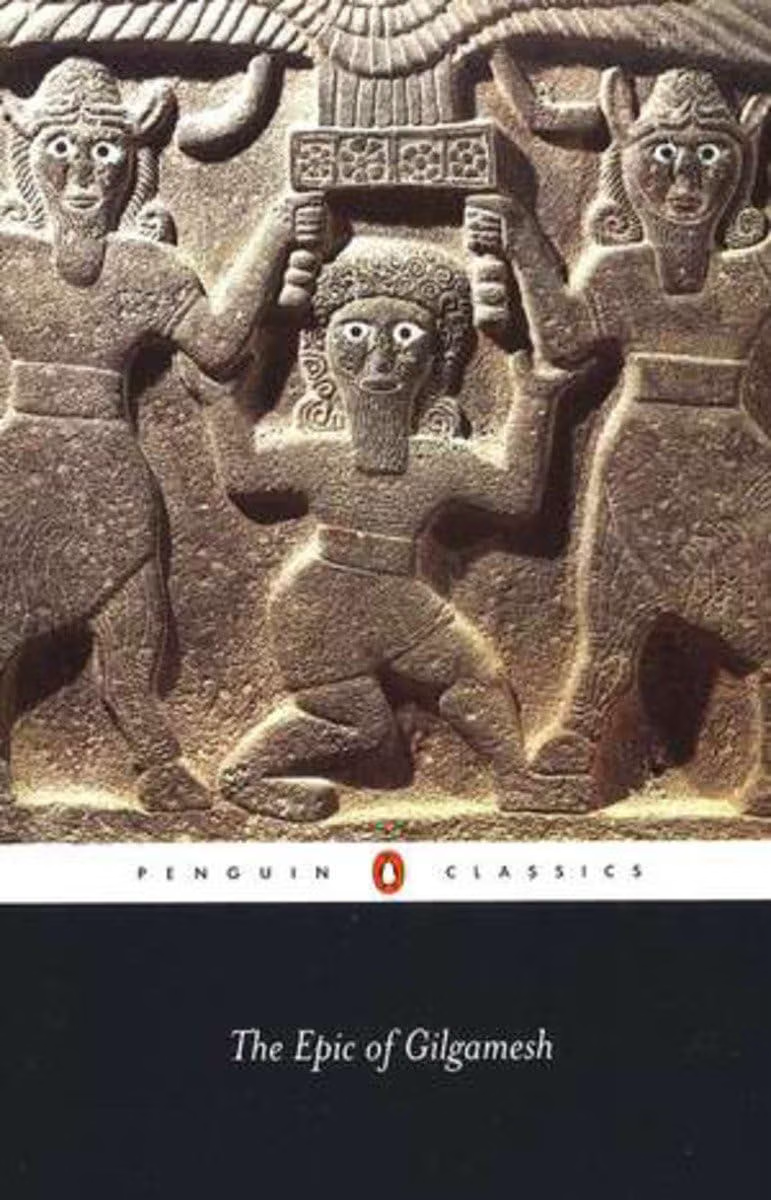
From the beginning of the tale, we discover Gilgamesh to be uncertain, for he is troubled by the meanings of his dreams. Gilgamesh has many dreams. In the first dream he sees the stars of the heavens appear above him and something like a bolt from Anu falls upon him. He tries to lift it, but it is too heavy. The crowd of Uruk then gathers around it and kisses its feet. Gilgamesh then discovers that he loves it like a wife. He caresses the object. Now he can lift it up and he places it before Ninsun’s feet and Ninsun makes it equal. After Gilgamesh explains his dream, Ninsun repeats his words, explaining and then goes on to state that Gilgamesh will soon make a friend, one who will become a trustworthy comrade and whose strength is comparable. She declares this friend as an equal to her son, whom he will love as a wife. Gilgamesh has a second dream and narrates it to his mother again. This dream centered around an axe that lied in the town square of Uruk. A large crowd gathers around in the same fashion as the previous dream and Gilgamesh, of course, loves it like a wife. He picks it up and sets it down at his mother’s feet. She makes it his equal as well. And Ninsun yet again repeats the dream, explaining its significance in the same manner as before: that he will “love him like a wife. you will dote on him…” as translated in the N.K Sanders translated edition of the story, published under Penguin house in the year 2000. This event may appear to be an open and shut case for the conversation, but it is unclear because Gilgamesh will go on to speak of his love for Enkidu as that of a “brother”. To prove a homosexual relationship requires a deeper analysis.
In the modern world we typically only use one word where the ancient Greeks used 8: Love. Although we often use this word in relation to romantic relationships, we also use it to describe other forms of human affection in which romance is not a dynamic. We use love to describe how we feel about our parents, where the ancient Greeks may refer to it as “storge” or familiar love, which would describe the love one might have for a family member. I am willing to acknowledge that storge can be used to describe the relationship between Enkidu and Gilgamesh, for several times in the epic, Gilgamesh refers to Enkidu as his “brother.” Contrary to what Akerman might argue, modern concepts of love are capable of understanding such love of which Gilgamesh proclaims to have for Enkidu. One might say “I love him like a brother”: a modern-day phrase used to describe storge, essentially. For this reason, many modern and ancient readers may begin to question a possible homosexual undertone but would soon lay them to rest upon reading Gilgamesh frequently refer to Enkidu as a brother, and they would not be misguided to do so. However, the type of love of which Gilgamesh proclaims, conflicts with the prophecy of which he is told by his mother, Ninsun, which I believe offers another layer to his grief when Enkidu dies.
One can begin to unwrap the ambiguity upon analysis of not just the homoerotic language and imagery but also the relational dynamics between Gilgamesh and his beloved Enkidu. Enkidu begins as Gilgamesh’s faithful sidekick. However, he proves to be much more than that. He proves to be Gilgamesh’s soulmate and equal. The God’s initially bring Enkidu into the world to counterpoint Gilgamesh. Unlike Gilgamesh, who is two-thirds god, Enkidu is fashioned from clay. He begins life as a wild man, raised by animals: crude and unrefined. Gilgamesh is unstable and suffers from immoderation. He is the greatest of all men and both his virtues and his flaws are outsized. He is the mightiest of warriors and the most ambitious of builders. Gilgamesh is wise, cultured royalty at the forefront of civilization. It is not until Enkidu arrives that Gilgamesh sees positive character development. Enkidu’s friendship seems to have calmed and refocused him. Enkidu’s strengths are Gilgamesh’s weaknesses and vice versa. Enkidu helped Gilgamesh see things more rationally and they helped shape each other’s decisions. Why is this dynamic significant?
This instance of vagueness establishes an important motif in the epic: uncertainty, which will be expanded upon later in the epic when Enkidu dies. As readers advance in the epic, it becomes apparent that Gilgamesh and Enkidu complement each other and share a mutual love for one another. However, shortly after Gilgamesh dies, Gilgamesh mourns him for serval days and nights. He grieves dramatically and roams earth searching for an answer for immortality. Why? Because he is incapable of acknowledging that perhaps his love for Enkidu was more than he had described it to others and to himself. Yes, the idea of death terrifies him as he so insistently express and motivates his journey as well. I propose his grief for is demised lover has just as much to do with his motives as the former. It is within his grief, I see something more is hidden. The author is essentially describing soulmates, which is supported by the use of the word “bride” used to describe Enkidu after his death. These are qualities we would use to describe the ideal soulmate by modern day concepts of love and ancient Greeks alike: Someone who complements your spirit, shines where you are dull and inspires you in a way the others cannot. The author presents us with an almost oneiric representation of a well-balanced relationship. One in which details how one cannot exist fully without the other. In addition to the ambiguous homoerotic interactions and language used throughout the story, we see the possibility of a homosexual relationship become more apparent under this new perspective. If we began to open the scope of our minds to this idea, we can then segway into understanding how Gilgamesh chooses to grieve Enkidu after he is dead.
The way in which Gilgamesh chooses to grieve Enkidu is the ultimate clue of which seals their homosexual relationship confusing /feelings of Eros for each other, making it all but ambiguous. There are 5 stages of grief (1) denial, (2) anger, (3) bargaining, (4) depression and (5) acceptance. Gilgamesh grieves Enkidu in the most dramatic of manners. Initially refusing to acknowledge his impending death, refusing to bury his body for several days before finally falling into an identity crisis, of which causes him to roam aimlessly around the world and engage in a frivolous, misguided and an ultimately failed pursuit of immortality. I am willing to argue that while Enkidu was alive, Gilgamesh was incapable of acknowledging the feelings of Eros for which he held for Enkidu, which is: (1) why he repeatedly refers to him as his brother in spite being told he would love him as a wife and (2) his grief is questionably intense as though for a lost lover, rather than a comrade. Just as one, by definition cannot love a wife in the same manner one loves a parent, one does not grieve a comrade in the same fashion as a romantic lover. Not to downplay the death of a friend in a way that assumes it to be less painful and significant to losing a lover, but the loss one would feel is radically different. Gilgamesh can no longer function. He states it himself many times. Part of his grief is due to the typical feelings of which characteristically accompany those who have lost someone close and the remainder, is likely due to the furious flame of which burns inside of Gilgamesh for not having been able to express the extent of his love for his beloved Enkidu and not exactly understanding what that love meant. Thus, making his identity crisis episode more understandable, for those who are struggling with coming to terms with their sexuality, tend to either overcompensate by trying to prove the opposite to be true or distract themselves and others by appearing to be preoccupied. So much so, that it seems they are not harboring an internal conflict at all.
This concept refers to “reaction formation” which according the research presented in Kathleen Berger’s Invitation to the “Life Span” refers to an ego defense mechanism in which someone perceives their true feelings or desires to be socially, or in some cases, legally unacceptable, and so they attempt to convince themselves or others that the opposite is true (Burger, 2015). We see this often in the gay community. According to a study done by BBC News in 2016, in which they commissioned a poll during a number of Pride celebration events, including in London and the U.S., 74% of the participants surveyed, felt the need to hide their sexual orientation or gender identity. I posit that this is likely what Gilgamesh is subconsciously doing when he proclaims his love for Enkidu in a manner which assumes storge as the ancient Greeks understood it. However, the former stated, this homosexual relational dynamic is incredibly unclear and debatable to readers. Via this lens, one can begin to unwrap the ambiguity and re-imagine the nature of Gilgamesh and Enkidu’s love for one another. The question remaining: Why the ambiguity? Why is it relevant?
The answer lies within discerning the author’s purpose. Although fundamental to understanding any work of literature, scholars often forget to ask this all-important question when studying this particular text. It is my belief that if we seek out an answer to why the author of this epic poem wrote the tale in the ambiguous approach that he chose to, holds the key to re-imagining and interpreting the nature of Gilgamesh and Enkidu’s relationship. With consideration of the historical context of which I outlined above and the manner in which the author chose to present the relationship in question to readers, I conclude that the author’s choice to be ambiguous, was largely due to attitudes towards homosexuality during the time. He wanted to create a narrative of which humanizes the homosexual. As a result, we have an epic gay love story in which readers find themselves rooting for Gilgamesh and Enkidu to have their happy ending and are sadden upon discovering the tragedy that later unfolds. Sexuality, not hindering the message or becoming a cultural or religious barrier to blind readers from appreciating true love. What normally would be a subject of ridicule or on the tail-end of a societal joke, as seen in ancient Greek literary works and modern-day alike, instead, transcends attitudes of its time and uses ambiguity as a tool to pen an epic gay love story of which is clear to those willing to perceive it, and a cautionary measure for those not willing to look beyond the dogmatic scope of their socially conditioned attitudes—but yet remain a love story either homosexual or a tale of epic friendship and tragic loss that all audiences might enjoy.
REFERENCES:
Ackerman, Susan. When Heroes Love: The Ambiguity of Eros in the Stories of Gilgamesh and David. Columbia University Press, 2012.
BBC News. "Pride in London research: Many LGBT+ people 'hide sexuality'." BBC News, 6 July 2016.
BERGER, KATHLEEN S. T. A. S. S. E. N. Invitation to the Life Span. 2nd ed., WORTH PUB, 2018.
BritishMuseum.org. "Same-sex Desire." British Museum, 2017, www.britishmuseum.org/explore/themes/same-sex_desire_and_gender/same-sex_desire.aspx#1. Accessed 2 Dec. 2018.
Dover, Kenneth J. Greek Homosexuality. Harvard University Press, 2016,
Livius.org. "Greek Homosexuality”- Livius." Livius - Articles on Ancient History, 2018, www.livius.org/articles/concept/greek-homosexuality/. Accessed 2 Dec. 2018.
Sandars, N K. The Epic of Gilgamesh: An English Version with an Introduction. Penguin Books, 2000,
Shaver, Phillip R., and Cindy Hazan. "A Biased Overview of the Study of Love." Journal of Social and Personal Relationships, vol. 5, no. 4, 1988, pp. 473-501, journals.sagepub.com/doi/abs/10.1177/0265407588054005#articleCitationDownloadContainer. Accessed 3 Dec. 2018.
Comments